How Strong Is Rakija?
(At Amberfire Distillery, we write from the perspective of a producer — explaining the spirits we craft, not just the categories they belong to-Amberfire Distillery, Wallan — Educational Blog .)
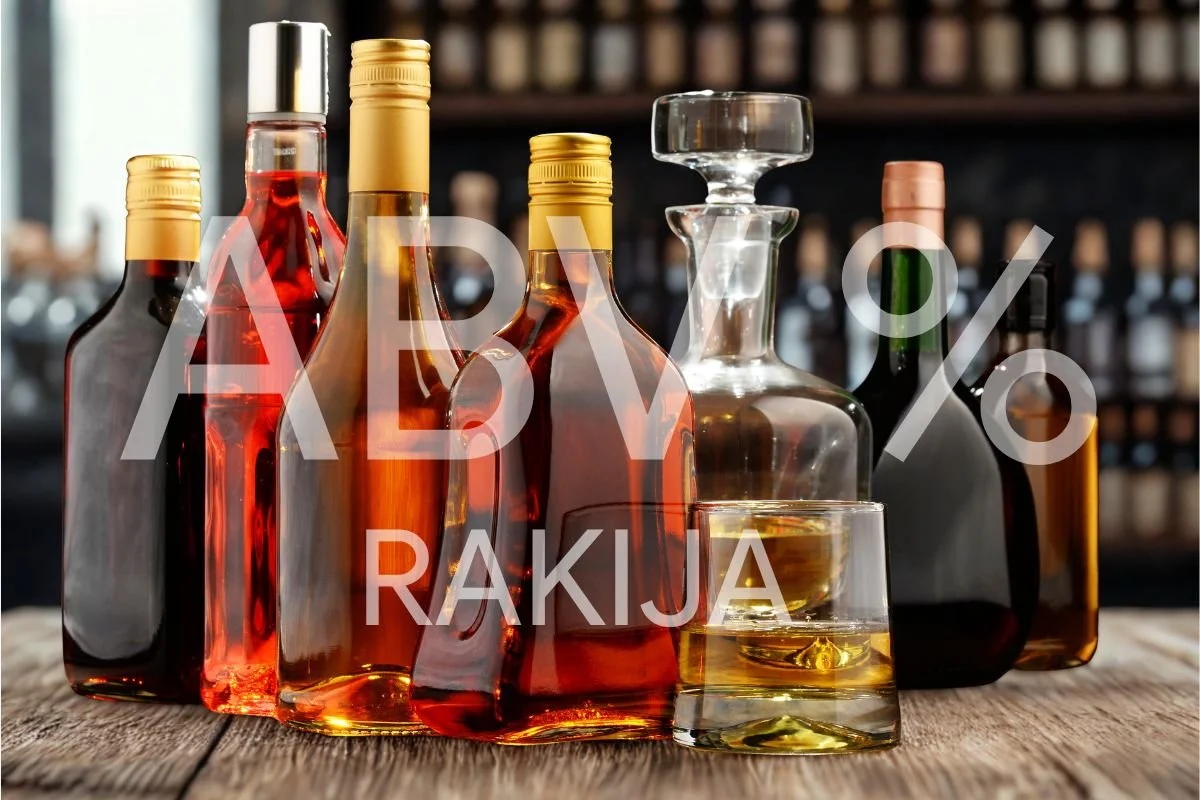
Different styles of rakija displayed alongside a glass, representing varying alcohol percentages (ABV) and the balance between strength and enjoyment.
Rakija Alcohol Percentage (ABV) Explained
Rakija is often described as a strong spirit — but how strong is it really?
This guide explains rakija’s alcohol percentage (ABV), why rakija sometimes feels stronger than other spirits, how strength was traditionally judged in the Balkans, and why modern rakija focuses on balance and enjoyment, not endurance.
If you’re new to the category, you may want to start with our complete guide explaining what rakija is and how it’s traditionally made before exploring alcohol strength in more detail.
Typical Rakija Alcohol Percentage (ABV)
Most commercially produced rakija today is bottled at around:
40% ABV (80 proof)
This places rakija in the same strength range as:
Vodka
Whisky
Rum
Gin
Rakija is not inherently stronger than other distilled spirits. Its reputation for strength comes largely from tradition and historical practices, rather than alcohol percentage alone.
Why Rakija Sometimes Feels Stronger Than Other Spirits
Even at similar alcohol percentages, rakija can feel more intense than vodka or whisky. There are several reasons for this.
Homemade Rakija Is Often Bottled Stronger
Traditionally, rakija was distilled at home once a year after harvest. These homemade versions were commonly bottled at:
45–50% ABV
Sometimes 55–60% ABV or more
Strength was judged by experience rather than precise instruments, and dilution to a standard bottling strength was uncommon. Higher strength was often associated with quality, pride, and durability rather than balance.
Distillation Style Affects Perceived Strength
Alcohol percentage is only part of the story.
Traditional rakija was often distilled in simple copper stills with minimal separation of heads and tails. This could leave higher levels of:
Fusel alcohols
Heavy congeners
These compounds can make a spirit feel:
Hotter on the palate
Rougher on the finish
More aggressive aromatically
Even at the same ABV, a less refined spirit can feel significantly stronger than a cleanly distilled one.
The Traditional “Bubble Ring” Test — And Why It’s Not Scientific
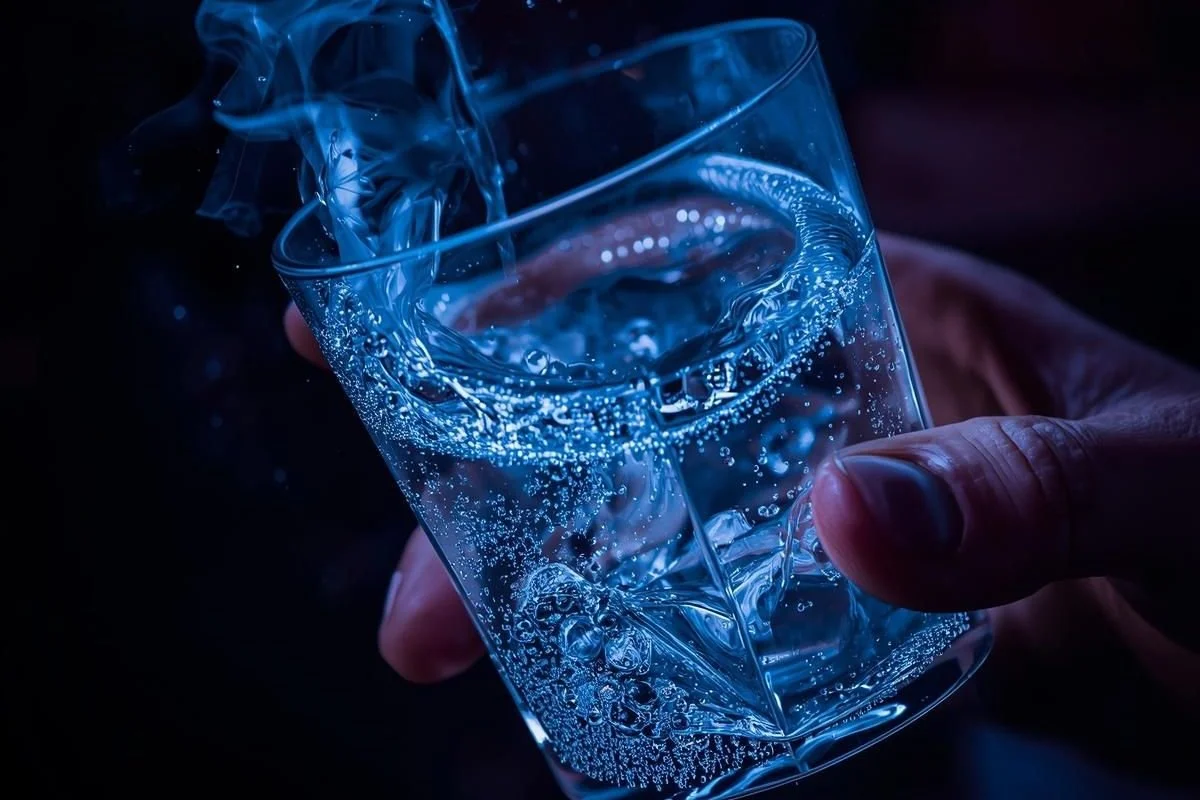
Rakija being strongly shaken in a glass to demonstrate the traditional Balkan “bubble ring” test once used to judge alcohol strength.
In Macedonia and across the Balkans, many parents and grandparents believed rakija was not real rakija unless it passed a simple test.
When a bottle was shaken, a ring of bubbles would form on the surface.
If those bubbles lasted a long time, the rakija was assumed to be strong — often believed to be 50% ABV or higher.
This belief came from observation, not superstition.
Why the Bubble Ring Happens
Liquids with higher alcohol content:
Have lower surface tension
Form smaller, more stable bubbles
Allow foam to persist longer
So yes — higher alcohol can produce a longer-lasting bubble ring.
Why the Bubble Test Is Unreliable
Despite this, the bubble ring test is not a scientific method for measuring alcohol strength.
Bubble stability is influenced by:
Alcohol percentage
Temperature
Residual sugars
Oils and congeners
Bottle shape and agitation
Two rakijas with the same ABV can produce very different bubble rings.
For this reason, the bubble test cannot reliably determine alcohol percentage.
Today, alcohol strength is measured accurately using calibrated instruments, not visual cues.
Tradition vs Modern Understanding of Strength
In the past, rakija at 50–55% ABV was often preferred:
It felt more serious
It stored well
Strength was linked to masculinity and status
Today, we understand something important:
Higher alcohol does not mean better rakija.
Very high alcohol levels:
Mask fruit character
Reduce balance
Increase harshness
Place greater strain on the body
Strength can impress — but balance is what gives pleasure.
Rakija Today: Enjoyment Over Endurance
Modern rakija is increasingly crafted to be:
Clean
Aromatic
Balanced
Enjoyable over time
This is especially important for:
Younger drinkers discovering rakija
Women, who often prefer elegance and aroma over raw power
Anyone who values enjoyment rather than intoxication
Rakija was never meant to be a contest of who can drink the strongest spirit.
It was meant to be shared, savoured, and enjoyed with food and conversation.
Does Oak Ageing Change Rakija’s Strength?

A glass of oak-aged rakija resting on a rustic wooden surface, showing how ageing with oak adds colour, smoothness, and warmth to traditional fruit spirits.
Oak ageing does not increase alcohol percentage, but it can change how strength is perceived.
Oak-aged rakija — often called gold rakija (žuta or stara) — tends to feel:
Softer
More rounded
Better integrated
Oak contributes vanilla, honey, and gentle sweetness, helping the alcohol feel smoother and more harmonious.
Rakija Strength at a Glance
Commercial rakija: ~40% ABV
Homemade rakija: often 45–60% ABV
Stronger than vodka? No, but often feels bolder
Oak-aged rakija: smoother, not weaker
Best enjoyed: slowly, with food and company
Closing Thought
Rakija’s reputation for strength comes from tradition, not excess.
When made with care, rakija is not about burning the body or proving tolerance.
It is about fruit, balance, memory, and ritual.
Honouring tradition today means keeping what was wise — and letting go of what no longer serves us.
A Note on Amberfire Rakija
At Amberfire Distillery, we craft rakija with a focus on balance and enjoyment rather than raw strength.
Our Amberfire Premium Gold Rakija reflects a modern, refined approach — preserving fruit character while offering a smooth, elegant finish.
Sources & Further Reading
The information in this article reflects widely accepted principles of alcohol strength, distillation, and responsible enjoyment, alongside lived Balkan tradition.
Alcohol by Volume (ABV) explained — Encyclopaedia Britannica
Why Is Alcohol Measured by Proof? | BritannicaDistilled spirits: production and classification — Encyclopaedia Britannica
https://www.britannica.com/topic/distilled-spiritExplained: Rakia with Australia’s first licensed producer — Drinks Trade Australia
https://www.drinkstrade.com.au/news/explained-rakia-with-australias-first-licensed-producer/A rakija family story: Balkan spirits in Australia — SBS Food
https://www.sbs.com.au/food/article/a-rakija-family-story-balkan-spirits-in-the-making/ig0i758ve